
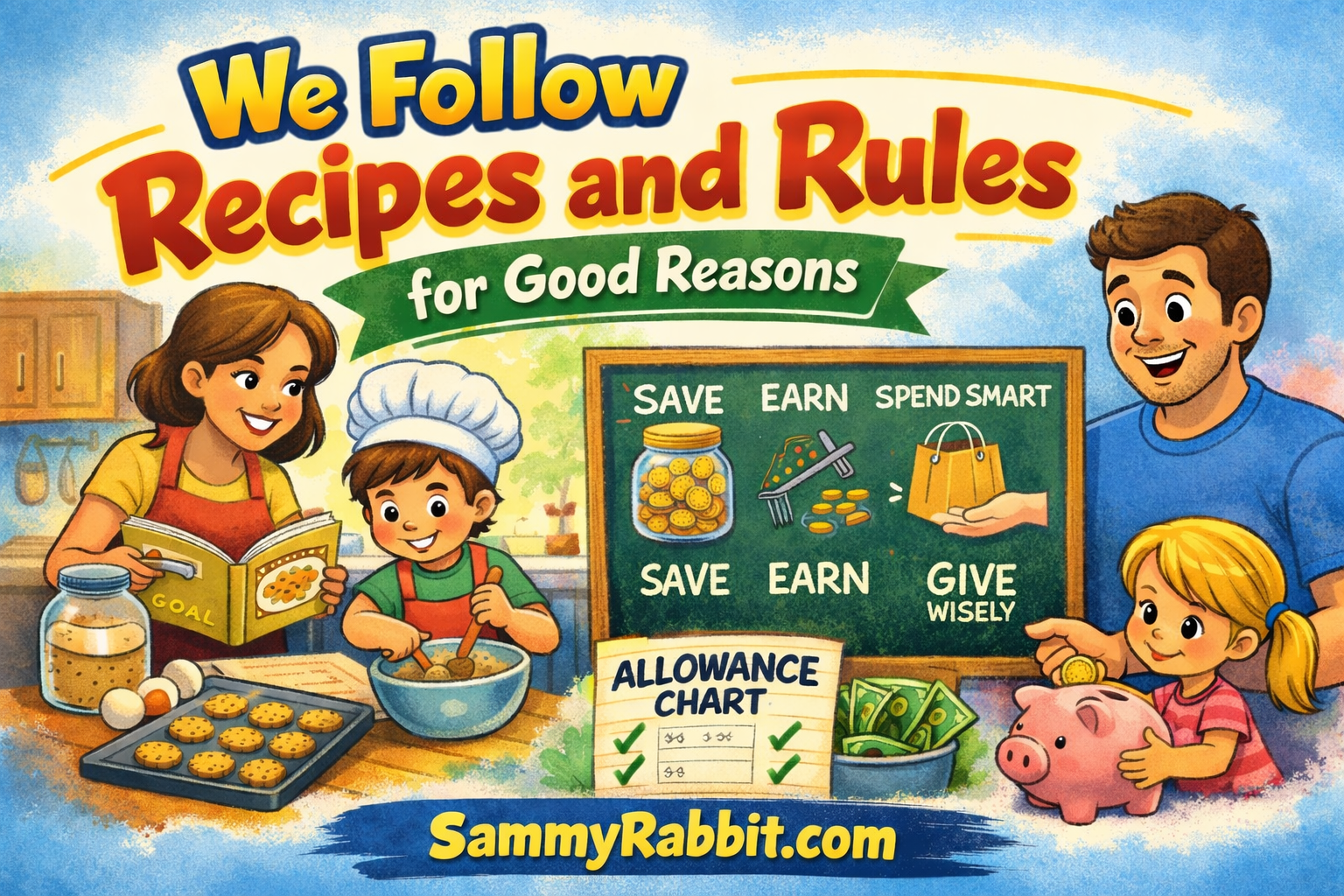
 We Follow Recipes and Rules for Good Reasons
Teaching kids about money doesn’t have to be complicated, intimidating, or overwhelming. In fact, when done well, it looks a lot like cooking a great meal. You start with a recipe and use select ingredients.
When it comes to teaching kids how to use money successfully and build great money habits that last over time, you’re well advised to do the same. Follow proven, time-tested strategies that reliably produce the results you seek.
Cooking up financial well-being isn’t about turning children into mini accountants or investment experts. It’s about giving them the right recipe and ingredients, introducing them in the right order, and helping them practice healthy money habits again and again.
So what belongs in a child’s “recipe” for lifelong financial well-being?
Below are some of the most important ingredients and money habits that reliably lead to financial well-being.
Ingredient #1: Understanding That Money Is a Tool
Before kids learn what to do with money, you want them to understand what money is.
Money is a tool and a powerful one at that.
Money is something children can use to meet needs, reach goals, make dreams come true, help others, create opportunities, and build the life they want to lead. For most of us, money is a limited resource at any given moment. And, it is one that must be managed thoughtfully rather than spent aimlessly, if, we want to achieve increasing levels of financial well-being.
Key habit:
Pause and think before making a money choice.
This habit helps kids learn that money decisions are choices and that those choices have consequences.
Key Sammy teaching resources:
Sammy Dictionary: Money + Habit + Money Habits
Stories: Sammy's Big Dream (Money School)
Songs: Get in the Habit! + Make Your Choices Count
Activities: Money School - Sammy's Big Dream + Money Mottos
Products: Sammy Says Series of Activity Books: Follow the Money Rules + Sammy's Big Dream Book Set
Ingredient #2: Saving Comes First
Parents and educators of every kind benefit from understanding the environment children are growing up in, particularly in the United States. It is an environment that strongly encourages consumption, often without much thought. Many children grow up surrounded by messages, both verbal and nonverbal, that money is meant to be spent immediately.
At the same time, two significant shifts over the past 50 years have changed how children experience money. First, children from every economic background now have unprecedented access to and influence over money. Second, many banks no longer actively encourage or offer savings accounts designed specifically for children.
As a result, saving often feels invisible or optional.
But saving is a foundational habit. It is a cornerstone of financial well-being, It is the chicken, if you will, in chicken soup. Regardless of whether a child understands anything else about money, you want them to get in the habit of saving it.
Making saving money a consistent habit, whether kids fully understand money concepts like wants and needs or not, shapes how they think, feel, and manage money. It sets them up for lasting success and puts them on a clear path toward greater financial well-being.
When kids learn to save, even small amounts, they develop patience, self-control, planning skills, and confidence. Saving teaches children that waiting can be worth it and that they are capable of making future-focused decisions.
So, make it a priority to teach kids that saving money is a great habit!
Key habit:
From every dollar, save a little.
This habit doesn’t require a big income or big goals. It requires consistency.
Key Sammy teaching resources:
Sammy Dictionary: Save
Story: It's a Habit Sammy Rabbit Book Set
Songs and Activities: Money School - Get in the Habit! + The Secret + Money Mottos - Save
Ingredient #3: Earning Builds Confidence, Ownership, and More Intentional Spending
Earning helps children value money more deeply and spend more intentionally.
When kids earn money—through age-appropriate chores, helping others, or small projects—they begin to understand and value money.
Key habit:
Link effort and being of service to income, esteem, and purpose.
Key Sammy teaching resources:
Sammy Dictionary: Earn + Work + Job
Story: Sammy's Big Dream (Money School)
Songs and Activities: Money School: Lemonade Stand + Money Mottos - Earn
Product: Sammy's Big Dream Book Set + Sammy Says Earn
Ingredient #4: Spending With Intention
Spending isn’t the enemy. Unplanned spending is.
Kids should absolutely enjoy using their money but with purpose. Teaching children to ask simple questions before spending helps them make good choices, avoid regret, and develop better judgment.
Questions like:
Do I really want this?
Do I need it now?
Is there something more important or valuable I could use this money for, like my dreams or goals?
Will I still be happy with this later?
Key habit:
Think before you spend.
This habit helps kids learn to weigh wants, needs, and priorities.
Key Sammy teaching resources:
Sammy Dictionary: Spend + Spend Smart + Budget
Story: Sammy's Big Dream (Money School)
Songs and Activities: Money School: Don't Spend More Than You Make + Money Mottos - Spend
Product: Sammy's Big Dream Book Set + Sammy Says Spend Smart
Ingredient #5: Goals Make Money Meaningful
Saving and earning feel abstract without identifying goals and/or dreams.
When children tie money to something meaningful, like a toy, a gift, a trip, or helping someone else, money choices become personal and motivating.
Goals teach children that money can help turn dreams into reality.
Key habit:
Set a goal and take small steps toward it.
This habit builds focus, persistence, and confidence. It can also inspire and shape behavior.
Key Sammy teaching resources:
Sammy Dictionary: Goal
Story: Sammy's Big Dream (Money School)
Songs and Activities: Money School - Get in the Habit! + Money Mottos - Goals + Dream Big Steps
Product: Sammy's Big Dream Book Set
Ingredient #6: Giving Builds Gratitude and Empathy
Financial well-being isn’t just about what kids keep—it’s also about what they give, donate, and share.
Giving teaches children generosity, gratitude, and social awareness. It helps them understand that money can be used to make a positive difference in the lives of others.
Key habit:
Give with intention.
This habit reinforces values and helps kids see money as a force for good.
Key Sammy teaching resources:
Sammy Dictionary: Give + Give Wisely
Story: Sammy's Big Dream (Money School)
Songs and Activities: Money School - Money Mottos - Giving + Dream Big Steps
Product: Sammy's Big Dream Book Set + Sammy Says Give Wisely
Ingredient #7: Consistency Beats Perfection
The most powerful ingredient in any recipe is repetition.
Kids don’t need perfect lessons or long lectures. They need consistent conversations, simple language, and regular practice.
Money habits grow the same way all habits do, over time.
Key habit:
Practice money habits regularly.
Small, repeated actions matter far more than one-time lessons.
Key Sammy teaching resources:
Sammy Dictionary: Money Habits + Habit + Money
Stories: Sammy's Big Dream (Money School)
Songs: Get in the Habit! + The Secret
Activities: Money School Free and Premium
Products: Sammy Says Series of Activity Books: Sammy Says Set + It's a Habit Sammy Rabbit Book Set
The Big Picture: Building Financial Well-Being One Habit at a Time
Financial well-being for kids isn’t about mastering everything at once. It’s about layering simple habits that grow stronger with age.
When children learn to:
Save consistently
Earn with purpose
Think before they spend
Set goals
Give thoughtfully
they’re building skills that support not just financial success, but confidence, independence, and lifelong decision-making.
So here’s the question worth reflecting on:
What ingredients are you putting into your child’s recipe for financial well-being?
Start small. Stay consistent. And remember, great habits, like great recipes, are built one step at a time.
Keep Kids and Families Learning
Kids, families, and schools of every kind can enroll in Sammy Rabbit’s Money School with a FREE, PREMIUM or Group Discount Money School Memberships, giving learners access to engaging, age-appropriate financial education resources.
Parents, teachers, and community leaders are invited to explore the resources and teaching tips available on SammyRabbit.com. Start with award-winning financial educator Sam X Renick’s:
Article series, Money Lessons Parents Should Teach Kids! OR Sammy's Standards Aligned Lesson Plans for Schools
Schools, community organizations, employers, and partners can learn more about Sammy's Dream Big Financial Education curriculum, a flexible, standards-aligned approach designed to help children build strong money habits, confidence, and lifelong skills.
Contact Sammy Today!
We welcome your questions, suggestions, and ideas! Let’s connect, brainstorm, and partner to keep helping kids, families, and communities build strong financial literacy knowledge, habits, and skills—so together, we can create better and brighter futures for all.
CONNECT NOW
