
 NOTE to parents, teachers, and educators of every kind: Use this definition as a simple, kid-friendly teaching tool. Click this link to view the full index of current money terms and definitions, and learn how to use the Sammy Rabbit dictionary to support teaching and learning.
Word and Category
Word: Save (Spend Less)
Related Definition: Save (Keep) + Spend + Spend Smart + Cost + Price + Choice
Category: Choice Word
What this category means:
Choice words help children understand how decisions affect their money. They help kids compare options and choose ways to keep more of their money.
Definitions
In Simple Words
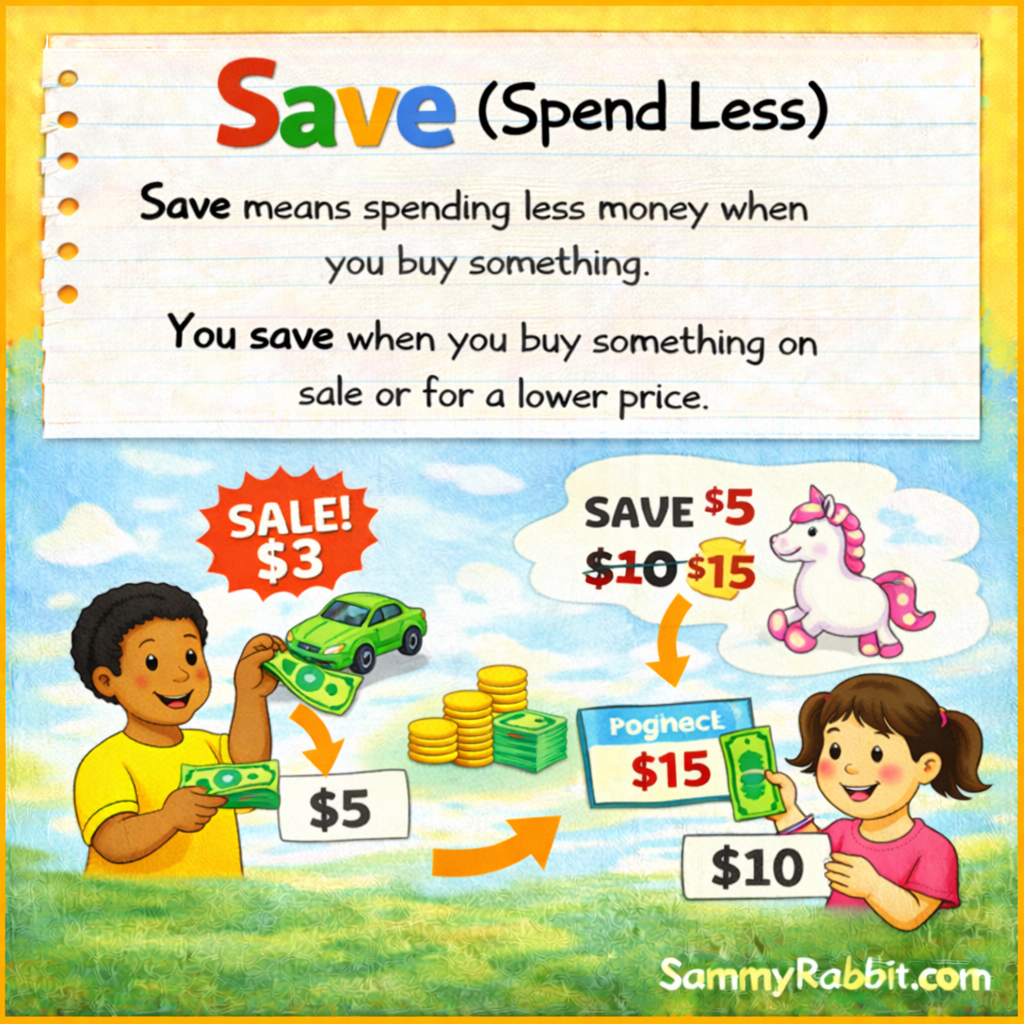
Save means spending less money when you buy something.
You save when you buy something on sale or for a lower price.
A Little More Grown-Up
Saving by spending less means paying a lower price for something, often by choosing a sale, discount, or better deal. This helps people keep more of their money.
Context Clues
You may see the word “save” used this way in Sammy Rabbit stories and activities when kids see signs like “Save 20%,” “On Sale,” or “Buy One, Get One.”
Sammy Says Sentences
Sammy Says: “When you spend less for an item you need, you save money!”
Silly Sentence
I saved money by buying my socks on sale, even though they were different colors.
Serious Sentence
Buying items on sale helps people save money by spending less.
Rhyming Sentences
Silly Rhyming Sentence:
I saw a sale and yelled, “Hooray!” I saved some cash the spending way!
Serious Rhyming Sentence:
When I wait for sales and lower price, my money choices feel real nice.
Money Habit Sentences and Connection
Money Habit Sentences:
Spending without looking for a sale can lead to a bad spending habit.
Looking for ways to spend less can lead to a good money habit.
Share with kids:
Learning that saving can mean spending less helps kids make smarter buying choices.
Examples of Save (Spend Less)
Buying something on sale
Using a coupon
Choosing a lower-priced item
Waiting for a discount
Examples of What it is Not to Save (Spend Less)
Buying something at full price without checking
Spending more than needed
Buying extra things just because they are on sale
Related Money Words
Spend Smart • Cost • Price • Choice • Money
Opposite Money Words
Overspend • Waste
Questions for Kids
The Goal Question:
“How can you save money by spending less so you can reach a goal you care about?”
The Emotional Question:
“How does it feel when you know you spent less and still got what you needed or wanted?”
The Logical Question:
“What could you compare or check before buying something to see if you can spend less?”
Remember
Saving by spending less helps your money last longer and builds smart money habits.
Quiz: Is this Save, Spending Less?
You get $5 for your birthday. You buy a candy bar right away without checking the price.
Is that saving by spending less? No!You want a toy that costs $5, but you wait and buy it on sale for $3.
Is that saving by spending less? Yes!
Get the Entire Dictionary in One PDF
Want a FREE printable PDF of the complete Sammy Rabbit Kid-Friendly Money Dictionary? Contact us to learn how to get a copy for your home, classroom, or community.
Related Standards Aligned Lesson Plans
Keep Kids and Families Learning
Kids, families, and schools of every kind can enroll in Sammy Rabbit’s Money School with a FREE, PREMIUM or Group Discount Money School Memberships, giving learners access to engaging, age-appropriate financial education resources.
Parents, teachers, and community leaders are invited to explore the resources and teaching tips available on SammyRabbit.com, starting with award-winning financial educator Sam X Renick’s article series, Money Lessons Parents Should Teach Kids!
Schools, community organizations, employers, and partners can learn more about Sammy's Dream Big Financial Education curriculum, a flexible, standards-aligned approach designed to help children build strong money habits, confidence, and lifelong skills.
Contact Sammy Today!
We welcome your questions, suggestions, and ideas! Let’s connect, brainstorm, and partner to keep helping kids, families, and communities build strong financial literacy knowledge, habits, and skills—so together, we can create better and brighter futures for all.
CONNECT NOW
